
Affiliate Disclosure: This post may contain affiliate links. I only recommend products I genuinely use, love, or would personally recommend to a friend.
If you’re wondering what to pack for your birth, this hospital bag checklist includes everything I’d bring for myself, my baby, and my partner after going through birth myself.
Packing your hospital bag doesn’t have to be overwhelming. Here’s what I’d actually bring for myself, my baby, and my partner after giving birth—plus the little comforts that made a big difference.
Whether you’re planning a hospital birth or a birth center delivery, packing your birth bag is one of those exciting milestones that makes everything start to feel real.
It’s also easy to overthink.
There are endless hospital bag checklists online with hundreds of items, and before you know it, you’re wondering if you need three outfits, five pillows, a sound machine, and enough snacks for a week.
The truth is, you don’t need to pack everything.
You just need the things that will help you feel comfortable, supported, and prepared.
I gave birth at a birth center instead of a hospital, so I went home just a few hours after my son was born. Even so, I packed my bag as if I might stay much longer because birth is unpredictable. Plans can change quickly, and I’d much rather have a few extra essentials than wish I’d packed something important.
Whether you’re delivering at a hospital or birth center, here’s exactly what I’d pack if I were doing it again.
Free Printable Hospital Bag Checklist
Still packing your birth bag?
If you’d like a simple version to print while you’re packing, I’ve created a free one-page Hospital Bag Checklist you can download instantly.
Whether you’re packing for a hospital or birth center, this printable includes the essentials for mom, baby, your support person, postpartum recovery, and a few last-minute reminders before you leave.
Want to preview the checklist first? View it here.
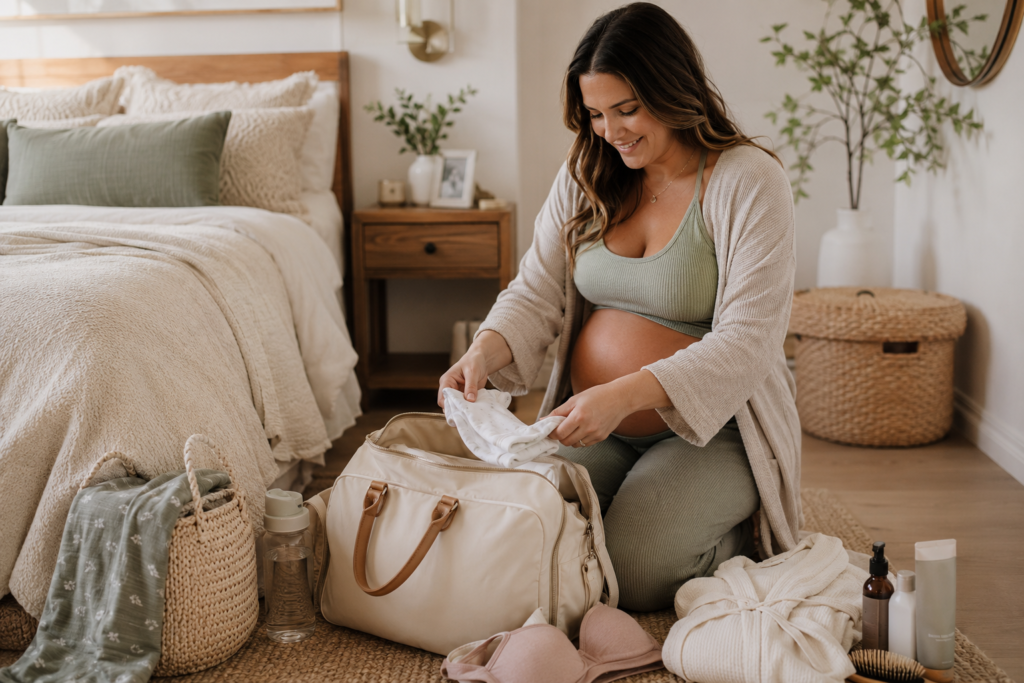
When Should You Pack Your Hospital Bag?
One of the best things I did was pack my birth bag well before my due date.
I had mine packed around 36 weeks, which is a common recommendation, although your OB or midwife may suggest packing a little earlier or later depending on your pregnancy.
Having it ready weeks in advance gave me one less thing to think about as my due date approached. Instead of wondering if I’d forgotten something, I knew everything was waiting by the door if labor started unexpectedly.
If you’re planning to bring fresh snacks or refrigerated drinks like coconut water, fruit, or electrolyte beverages, consider making a simple checklist to keep on your refrigerator. That way, when it’s time to leave, you or your partner can quickly grab the last few items without trying to remember everything in the excitement.
Hospital Bag Checklist at a Glance
I created this hospital bag checklist based on what I actually packed.
For Mom
- Comfortable labor gown or robe (optional)
- Nursing bra
- Comfortable going-home outfit
- Slip-on shoes
- Warm socks
- Toiletries
- Lip balm
- Hair ties
- Phone charger with a long cord
- Water bottle with a straw
- Electrolytes
- Easy snacks
- Birth plan
- Postpartum recovery items
For Baby
- Infant car seat (installed before your due date)
- Going-home outfit
- Hat
- Swaddle or blanket (if desired)
- Burp cloth
- Newborn diapers and wipes (optional but nice to have)
For Your Partner or Support Person
- Change of clothes
- Toiletries
- Phone charger
- Water bottle
- Snacks
- Pillow and blanket if allowed
- Sweatshirt or layers
- Entertainment for downtime
Still deciding what to put on your baby registry? Before you start packing your hospital bag, make sure you’ve covered the newborn essentials you’ll actually use once you get home. My Baby Registry Must-Haves guide walks through the products I reached for every day as a new mom.
Create a Birth Space That Feels Like Your Nest
One thing I don’t see talked about enough is how much your environment can affect the way you experience labor.
Labor is an intense, deeply personal, and incredibly primal experience. As contractions become stronger, many women naturally turn inward. Feeling safe, calm, and comfortable can make a huge difference.
Instead of only thinking about what you’ll physically need, think about what will help your birth space feel more like your own little nest.
For me, that meant packing things that helped me relax rather than simply checking items off a list.
You might want to bring:
- Written birth affirmations
- Positive quotes or meaningful scripture
- Family photos or your baby’s ultrasound picture
- A journal
- A calming labor playlist
- Meditation recordings
- Bluetooth speaker
- Earbuds or headphones
- A favorite blanket
- A cozy scarf or wrap
- A comfortable robe
- Your own pillow (if desired)
If your hospital or birth center allows it, dim lighting, battery-operated candles, or familiar scents can also help create a calmer environment.
Birth isn’t something you can completely plan for—but surrounding yourself with familiar comforts can help you feel grounded no matter how your labor unfolds.
If you’re trying to keep baby gear simple, you’ll probably enjoy my guide to Newborn Nursery Essentials, where I share what was actually worth having ready before bringing baby home.
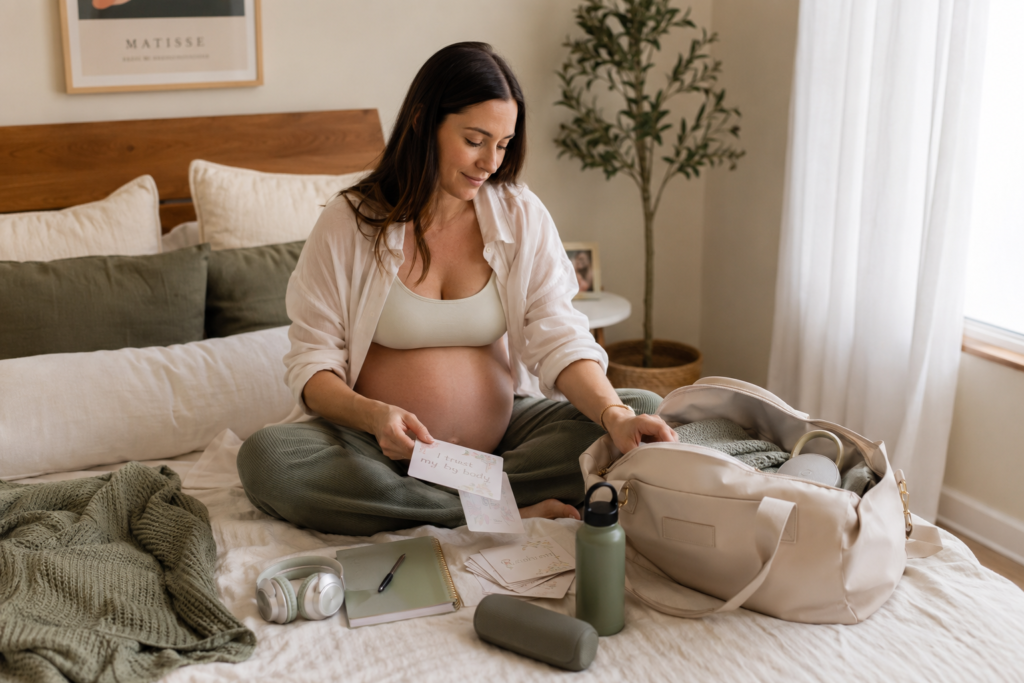
Don’t Forget Your Birth Plan
If you’re planning a hospital birth, I highly recommend bringing a few printed copies of your birth plan.
As labor becomes more intense, you probably won’t feel like explaining your preferences over and over again. Having several copies makes it easy for your partner to hand one to nurses or new members of your care team so everyone understands what’s most important to you.
I gave birth at a birth center, so I had already discussed my birth plan with my midwives during the weeks leading up to labor. We all knew the plan ahead of time, so I didn’t feel the need to print copies.
If I’d been giving birth in a hospital, though, I absolutely would have packed several.
It’s one simple way to help your partner advocate for your choices while you stay focused on bringing your baby into the world.
Tip: Try to keep your birth plan to one page if possible. A short, easy-to-scan summary is much more likely to be read than several pages of detailed notes.
What I’d Pack for Labor
Labor can last many hours—or much longer than you expect. While you don’t need to overpack, having a few thoughtful comforts can make the experience feel much more manageable.
Stay Hydrated
Labor is hard work, and staying hydrated is incredibly important.
I packed a large insulated water bottle with a straw so I could easily sip between contractions. I also brought electrolyte packets, coconut water, and aloe drinks for extra hydration and a few additional calories.
Depending on your provider’s recommendations and where you’re giving birth, you may have different guidelines about eating and drinking during labor. Ask ahead of time so you know what to expect.
Pack Easy Snacks
As labor became more intense, I wasn’t interested in eating much.
Having light, easy-to-digest foods available was much more appealing than a heavy meal.
Some ideas include:
- Fresh fruit
- Applesauce pouches
- Crackers
- Granola bars
- Honey sticks
- Trail mix
- Dried fruit
- Protein bars
Even if you don’t eat much during labor, your partner almost certainly will appreciate having snacks available too.

Plan Your First Meal After Birth
This is something I don’t see mentioned often enough.
After giving birth, your body has just done something incredible—and it’s going to need fuel.
If your hospital or birth center provides meals, wonderful.
If not, think ahead about what you’d like your first meal to be. You may want to pack food, have a family member bring something, or plan to order takeout.
After my son was born, we ordered a huge bowl of ramen with extra eggs and pork to the birth center. It was exactly what I wanted after hours of labor—warm, comforting, filling, and packed with protein.
Whatever you choose, I recommend planning for something nourishing that sounds genuinely appealing to you. Warm meals often feel especially comforting after birth, and including plenty of protein can help support your recovery.

Postpartum Recovery Essentials
Even if you’re hoping to head home quickly, it’s worth packing a few postpartum recovery items just in case your stay ends up being longer than expected.
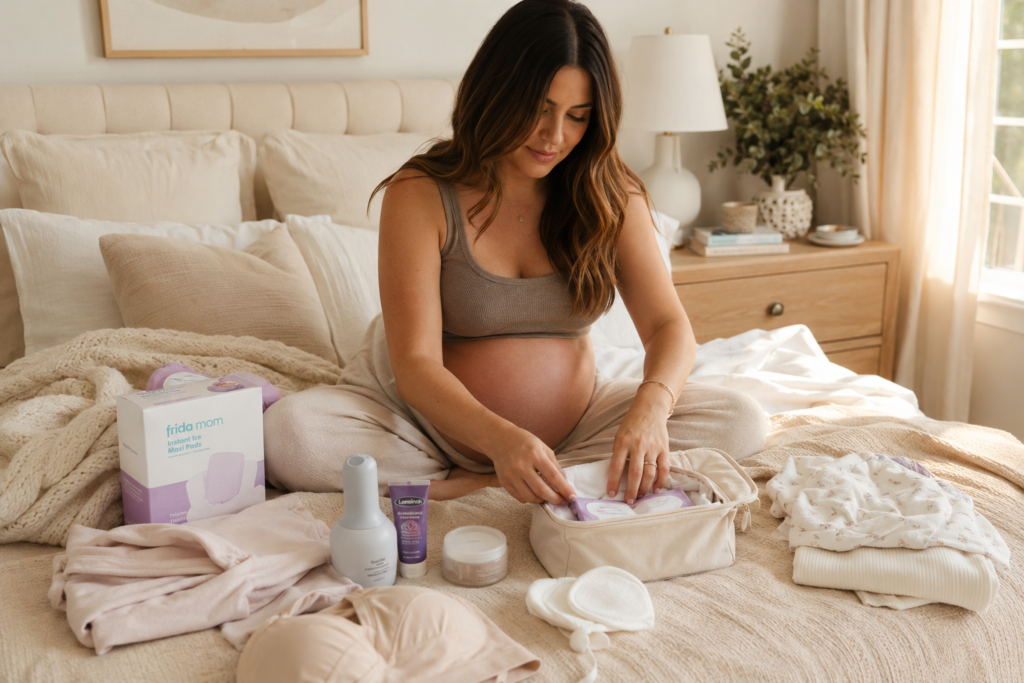
I’d consider bringing:
- Nipple cream
- Nursing pads
- Comfortable nursing bra
- Frida Mom Instant Ice Maxi Pads or similar perineal ice packs
- Postpartum underwear if you have a favorite brand
- Any herbal supplements recommended by your doctor or midwife
- Lip balm
- Face moisturizer
- Hairbrush
- Toothbrush and toothpaste
I actually packed many of these items but ended up going home so quickly from the birth center that I didn’t need most of them there. Still, I’m glad I had them with me because birth doesn’t always go according to plan.
One product I’d happily buy again is the Frida Mom Instant Ice Maxi Pads. They’re ready to use immediately, provide soothing cooling relief, and are much easier than trying to make your own ice packs during those first few days.
If you’re still putting together your recovery supplies, you’ll also want to read my complete guide to Postpartum Essentials for New Moms, where I share everything that helped me during those first weeks after birth.
What I Wish I’d Packed
Overall, I was happy with what I brought.
The one thing I really wish I’d packed?
My robe.
I left the birth center around two o’clock in the morning. Even though I had packed comfortable clothes, I remember feeling surprisingly cold afterward and wishing I had something soft and cozy to wrap around myself.
I’d also recommend packing slip-on shoes.
By the end of pregnancy—and especially after giving birth—you probably won’t feel like bending over to tie your shoes. Having something easy to slide on makes heading home much more comfortable.
Things I Packed But Didn’t End Up Using
One thing I’ve learned about birth is that it’s impossible to predict exactly how things will go.
I packed a few extra things that ended up coming home untouched—and that’s completely okay.
For example, I packed several extra outfits for myself because I wasn’t sure what I’d feel comfortable wearing afterward. In reality, I only wore one comfortable outfit home.
I also packed postpartum pads and disposable underwear, but my midwives already had everything I needed during my short stay, so I saved the supplies I’d packed for when I got home.
I’d rather unpack a few things when I get home than spend my labor wishing I’d brought them.
If you’re debating whether to bring something that would make you more comfortable, I’d probably toss it in the bag if you have the space. Peace of mind is worth a little extra room.
A Helpful Tip My Midwives Shared
One of my favorite pieces of advice actually came from my midwives.
They gave us a small bottle of olive oil to use during our baby’s first diaper changes.
The sticky first stools, called meconium, can cling to baby’s skin and be surprisingly difficult to wipe away. Applying a thin layer of olive oil beforehand helped prevent it from sticking, making those first diaper changes much easier.
I’d never heard that tip before, but I thought it was brilliant.
If you’re delivering at a hospital, you could ask your care team if they recommend something similar before packing your own. Every hospital and provider may have different preferences, so it’s always worth checking first.
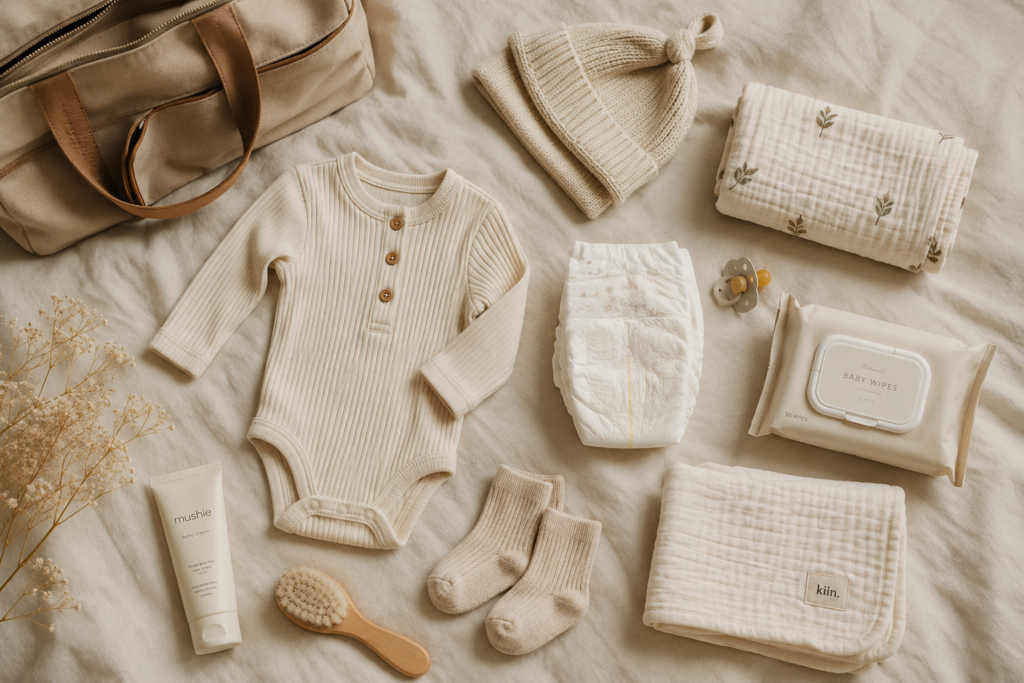
What to Pack for Baby
The good news is that your baby doesn’t actually need very much during your hospital or birth center stay.
In fact, many hospitals provide newborn diapers, wipes, a swaddle blanket, a hat, and other basic supplies while you’re there. Still, I like having a few familiar items packed so everything is ready for the trip home.
Here’s what I’d bring:
- Installed infant car seat
- Going-home outfit (choose one that’s appropriate for the weather)
- Extra onesie
- Socks if needed
- Soft blanket or muslin swaddle
- Burp cloths
- Pacifier (if you plan to use one)
- Newborn diapers and wipes (optional)
Even if your hospital provides diapers and wipes, you may prefer bringing the brands you plan to use at home. If you already know which diapers or wipes you’d like to use, it can be nice to start with those from the very beginning.
Not sure which diapers to start with? I compared the newborn diapers I’d actually buy again in my guide to the Best Diapers for Newborns.
What to Pack for Your Partner or Support Person
Labor is exhausting for everyone involved—just in different ways.
While you’re focused on giving birth, your partner or support person is often trying to anticipate your needs, communicate with your care team, keep track of your belongings, and stay present through what can be a very long day (or night).
Packing a few essentials ahead of time helps them stay focused on supporting you instead of worrying about where to find food or a phone charger.
Before finishing your hospital bag checklist, don’t forget to help your partner pack too.
I’d suggest packing:
- Comfortable change of clothes
- Sweatshirt or light jacket
- Pajamas if staying overnight
- Toiletries
- Phone charger
- Refillable water bottle
- Plenty of snacks
- Wallet and ID
- Pillow and blanket if your hospital allows it
- Any medications they take regularly
Your partner is your teammate during labor. Taking care of them helps them take better care of you.

What Hospitals Usually Provide
Every hospital and birth center is a little different, so it’s always worth asking your provider what will already be available.
Many hospitals provide items like:
- Newborn diapers
- Baby wipes
- Mesh postpartum underwear
- Large maternity pads
- Peri bottle
- Disposable ice packs
- Baby blanket
- Newborn hat
- Bulb syringe
- Basic toiletries
Some hospitals even encourage families to take home unopened supplies after discharge.
Even so, I still like bringing a few of my own favorites—especially diapers, wipes, toiletries, or postpartum products that I already know I’ll be using once I get home.
Wondering what you really need versus what can wait? My Baby Registry Mistakes to Avoid article shares the items I wish I’d skipped and the ones I was so glad I had.
My Favorite Hospital Bag Essentials
If I could only recommend a handful of items that made the biggest difference, they’d be:
- Large water bottle with a straw
- Electrolytes or coconut water
- Easy snacks
- Comfortable robe
- Slip-on shoes
- Long phone charger
- Birth affirmations or printed birth plan
- Bluetooth speaker or earbuds
- Lip balm
- Cozy blanket from home
Remember: Your Hospital Bag Doesn’t Have to Be Perfect
Those simple comforts helped me feel much more relaxed and prepared.
If you forget something, don’t panic.
Hospitals and birth centers have many of the basics, family members can often bring forgotten items later, and your partner can always make a quick trip home if needed.
The goal isn’t to pack perfectly.
The goal is to help yourself feel calm, comfortable, and prepared so you can focus on meeting your baby.
Final Thoughts
This hospital bag checklist isn’t about packing for every possible scenario.
It’s about giving yourself one less thing to worry about.
Whether you’re planning a hospital birth or a birth center delivery, remember that you don’t need to pack perfectly. Your care team will have many of the essentials, and chances are someone can always bring you something later if you forget it.
Instead, focus on bringing the things that help you feel comfortable, supported, and cared for.
To me, that meant packing a few cozy comforts from home, staying hydrated, planning for a nourishing meal afterward, and making sure the little details were already taken care of so I could stay present during labor.
Birth is unpredictable, but packing your hospital bag ahead of time can help you feel calmer, more prepared, and ready to focus on meeting your baby.
And remember—you don’t have to figure everything out before your baby arrives.
If you’re still preparing for those first few weeks at home, browse my collection of practical guides for first-time moms, including newborn essentials, feeding, diapering, sleep, and baby registry recommendations that are based on what actually helped me.
Frequently Asked Questions
When should I pack my hospital bag?
Many providers recommend having your hospital bag packed by around 36 weeks of pregnancy, although your doctor or midwife may suggest packing earlier depending on your pregnancy. Packing ahead of time can reduce stress and ensure you’re ready if labor starts unexpectedly.
What should I not forget in my hospital bag?
Some of the most commonly forgotten items include a long phone charger, lip balm, a reusable water bottle, your birth plan, snacks, and comfortable clothes for going home. If you’re planning to bring refrigerated drinks or fresh snacks, keeping a checklist on your refrigerator can help you remember those last-minute items.
Do hospitals provide diapers and wipes?
Many hospitals provide newborn diapers, wipes, and other basic baby supplies during your stay. Policies vary, so ask your hospital ahead of time. Even if supplies are provided, you may still prefer bringing your favorite brands from home.
Should I bring my own postpartum supplies to the hospital?
Many hospitals provide postpartum basics like mesh underwear, pads, peri bottles, and disposable ice packs. However, many moms prefer bringing a few familiar products—such as their favorite nursing bra, nipple cream, or Frida Mom recovery items—for extra comfort.
What should my partner pack for the hospital?
Your partner should pack comfortable clothes, toiletries, snacks, a phone charger, medications, and anything they’ll need if labor lasts longer than expected. Supporting someone through labor can be physically and emotionally tiring, so it’s important they have what they need too.
Related Articles
If you’re getting ready for your baby’s arrival, these guides can help you next:
- Baby Registry Must-Haves: Real Essentials You’ll Actually Use
- Best Baby Products for Newborns (12 Essentials That Actually Help)
- Newborn Survival Guide for First-Time Moms
- 15 Things I Didn’t Know I Needed as a New Mom
- Diapering Essentials for Newborns
- Breastfeeding Essentials for New Moms (What Actually Helps)
- Bottle Feeding Essentials for New Moms