
Affiliate Disclosure: This post may contain affiliate links. I only recommend products I genuinely use, love, or would personally recommend to a friend.
Diapering is one of those things you don’t think much about before your baby arrives…
and then suddenly you’re doing it all day long.
In those early newborn weeks, I quickly figured out which products actually made diaper changes easier, which ones I used constantly, and a few simple tricks that helped everything go more smoothly.
This guide covers the diapering essentials for newborns that helped us most, plus a few things I learned along the way that I wish I’d known from the beginning.
If you’re in the early newborn stage, I put everything together here: Newborn Survival Guide for First Time Moms (What Actually Helps)
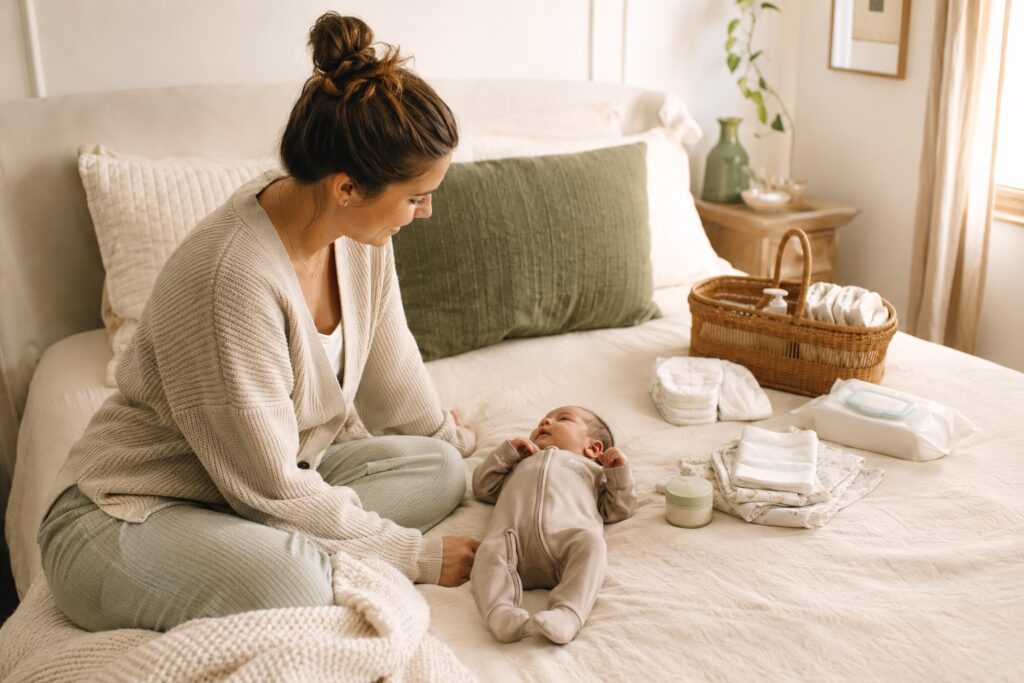
What Actually Helped During Newborn Diaper Changes
1. Diapers (Don’t Overdo Newborn Size)
You’ll go through a lot of diapers — but not necessarily a lot of newborn diapers.
For us:
- we used about 100 newborn diapers total
- and went through 10+ diapers a day
Babies grow quickly, and some skip newborn size altogether.
What I’d recommend:
- start with a small stash of newborn diapers
- have size 1 ready to go
See the diapers that worked best for us
2. Wipes (Prep Them Before You Start)
Wipes are something you’ll use constantly.
One small thing that made diaper changes easier for us:
Pull a few wipes out before you start.
Because:
- wipes don’t always come out easily
- babies are wiggly
- and once you start, you don’t have a free hand
Having them ready makes everything smoother.
Shop the wipes I still use daily
3. The First Few Days: Meconium Is Different
The first few days, your baby will have meconium poops, and they’re very different from what comes later.
They’re:
- dark (almost black)
- very sticky
- harder to clean
One of the best tips I was given by my midwives:
Instead of using diaper cream right away, apply a small amount of olive oil to your baby’s bottom during diaper changes.
This helps create a barrier so the next bowel movement doesn’t stick to their skin — which makes cleanup much easier.
They actually did this for us before we left and sent us home with a bottle, and I’m so glad they did.
If you’re planning to cloth diaper, many parents choose to use disposables for the first few days since meconium can be difficult to wash out.
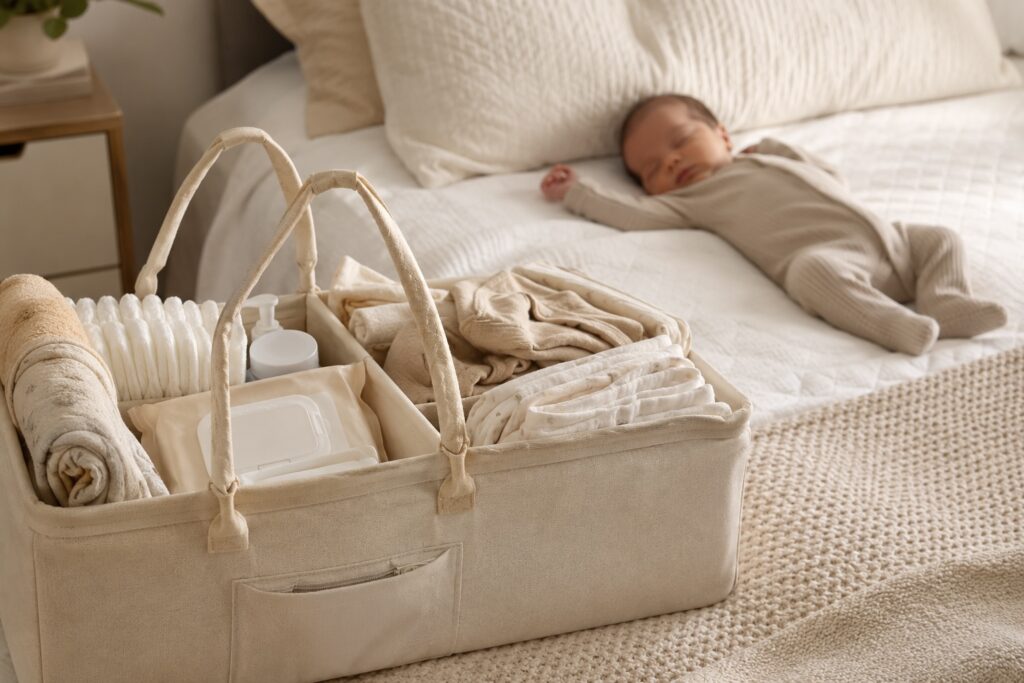
4. A Changing Setup That Works (Not Just What Looks Good)
I had a designated changing pad set up ahead of time…
and I barely used it.
In those early days — especially while recovering — I stayed in one main space and kept everything close.
What worked best for me:
- changing baby on the bed
- keeping supplies within arm’s reach
- using disposable underpads underneath
I would keep an underpad laid out, and if things got messy, I could just toss it and replace it instead of having to clean anything.
Simple, practical, and much easier during recovery.
These disposable underpads saved me so much cleanup
This is also something I didn’t fully think through ahead of time — I talked more about that here:
15 Things I Didn’t Know I Needed as a New Mom
5. A Few Things No One Really Tells You
There are a few small things that made a big difference once I figured them out:
- Take socks or booties off before diaper changes
Not just the onesie — those can get messy quickly. - Be mindful when lifting baby’s legs
Pulling their knees too far toward their belly can put pressure on their stomach…
which can sometimes trigger another poop mid-change. - For boy moms: keeping them loosely covered during changes can help avoid surprise messes
These are the kinds of things you learn as you go — but they definitely make diaper changes easier.
6. Diaper Balm (or a Simple Alternative)
You don’t need a complicated routine, but having something on hand helps protect baby’s skin.
I personally use and love: Motherlove Diaper Balm
It’s gentle, simple, and works really well.
Shop my favorite diaper balm
15% off auto applies, or code CASSANDRAML
Another option my midwives recommended: apricot oil
You can use it:
- instead of diaper cream
- after baths
- or as an all-over moisturizer
I still use it regularly — it’s simple and really effective.
See the apricot oil my midwives recommended
7. A Diaper Pail (Worth It for Everyday Use)
This is one of those items that makes daily life easier.
A good diaper pail helps:
- contain smells
- keep things cleaner
- simplify your routine
I use and recommend the Ubbi Diaper Pail (mainly because it uses regular trash bags)
The diaper pail that made everyday cleanup easier
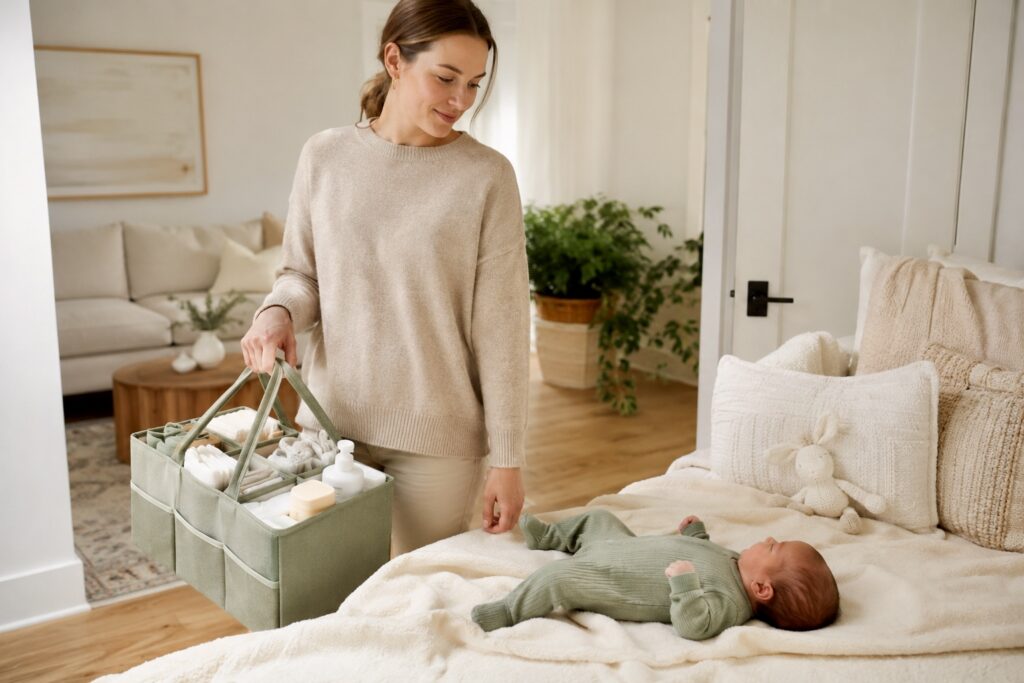
8. A Diaper Caddy (Makes Everything Easier)
Having everything in one place makes a big difference — especially when you’re not moving around much in those early postpartum recovery weeks.
I recommend keeping a portable diaper caddy stocked with:
- diapers
- wipes
- diaper balm or oil
- extra clothes
- disposable underpads
That way you can move it wherever you are instead of going back and forth.
I kept mine beside the bed during the newborn stage and used it constantly.
I like the Skip Hop Diaper Caddy because you can carry it room to room easily.
See the diaper caddy I keep stocked every day
A portable diaper caddy became one of my most-used newborn items. If you’re building your newborn setup from scratch, you may also like: Newborn Feeding Station Setup: What I Kept Within Reach Every Day.
9. Letting Baby’s Skin Breathe
One simple thing that helps prevent irritation:
a little bit of diaper-free time each day
Even a few minutes:
- helps keep skin dry
- reduces chances of diaper rash
- gives their skin a break
It doesn’t have to be anything complicated — just something to be aware of.
According to the American Academy of Pediatrics, keeping baby’s skin clean and dry is key for preventing diaper rash.
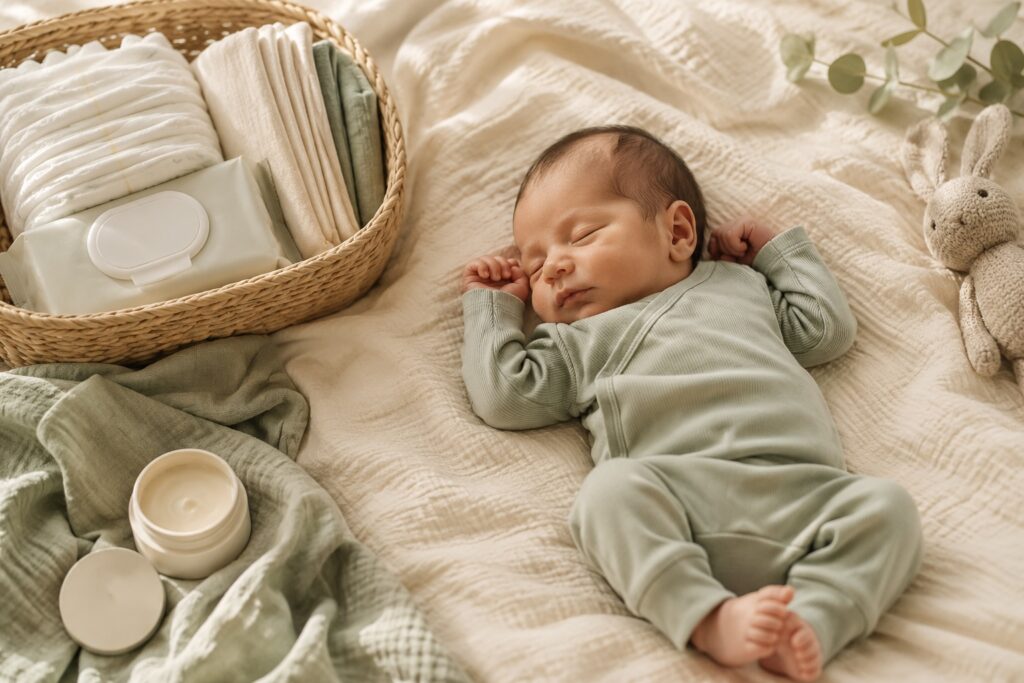
Final Thoughts on Diapering Essentials for Newborns
Diapering is one of those things you do countless times during the newborn stage, so having the right setup can make a surprisingly big difference.
You don’t need every product on the market or a perfectly organized nursery.
A few reliable essentials, a simple system, and supplies that are easy to reach will take you a long way.
Most of all, give yourself time.
The first few weeks can feel like a lot, but before long diaper changes become second nature and you’ll find a routine that works for both of you.
If you’re keeping things simple, you may also enjoy my guide to Newborn Essentials for the First 3 Months (Minimalist Mom List).
Related Articles for New Moms
- Diaper Bag Essentials for New Moms: What I Actually Pack
- Best Baby Wipes for Newborns (Clean, Gentle Options That Actually Work)
- Newborn Sleep Essentials for Better Nights (What Actually Helps)
- Baby Registry Must Haves: Real Essentials You’ll Actually Use
- Breastfeeding Essentials for New Moms (What Actually Helps)
- How to Set Up a Newborn Diapering Station That Actually Works