
Affiliate Disclosure: This post may contain affiliate links. I only recommend products I genuinely use, love, or would personally recommend to a friend.
One of the things I heard about constantly as a new mom was newborn wake windows.
Everyone seemed to have an opinion about how long babies should stay awake, when they should nap, and how to avoid an overtired baby.
At first, I didn’t pay much attention to wake windows.
Then around three or four months, I started paying too much attention to them.
I found myself watching the clock instead of watching my baby.
Eventually, I learned that tracking newborn wake windows can be a helpful guide, but they aren’t something you need to obsess over.
During the first three months, wake windows for newborns are usually much shorter than many new parents expect.
Every baby is different.
Some days your baby will be ready for a nap sooner. Other days they’ll stay awake longer and seem perfectly happy.
The most helpful thing I learned was to use wake windows as a rough guideline while paying attention to my baby’s cues.
If you’re wondering how long newborns typically stay awake and what to do during those awake periods, here’s what worked for us during the first three months.
Looking for a quick answer? Here’s a simple newborn wake window chart for the first three months.
| Baby Age | Typical Wake Window |
| 0-4 Weeks | 30-60 Minutes |
| 1 Month | 45-60 Minutes |
| 2 Months | 60-90 Minutes |
| 3 Months | 90-120 Minutes |
Remember: these newborn wake windows are averages, not rules. Always pay attention to your baby’s sleepy cues as well.
What Are Wake Windows?
A wake window is simply the amount of time your baby stays awake between naps.
The clock starts when your baby wakes up and ends when they fall asleep again.
During the newborn stage, those wake windows are usually very short.
Sometimes by the time I fed my son, changed his diaper, and cuddled him for a few minutes, he was already showing sleepy cues again.
As babies grow, wake windows gradually become longer.
Newborn Wake Windows (0–4 Weeks)
Typical wake window: 30–60 minutes
During the first few weeks, most newborns spend a large portion of the day sleeping.
Our wake windows often looked like this:
- Feed
- Diaper change
- A few minutes of cuddles
- Back to sleep
There wasn’t a lot of time for anything else.
And that’s completely normal.
At this age, your baby is adjusting to life outside the womb and doesn’t need constant stimulation.
Plus you are recovering from birth and need lots of rest too.
Wake Windows at 1 Month
Typical wake window: 45–60 minutes
Around one month old, my son started having slightly longer periods of alertness.
This was when we started incorporating simple activities like:
- Talking face-to-face
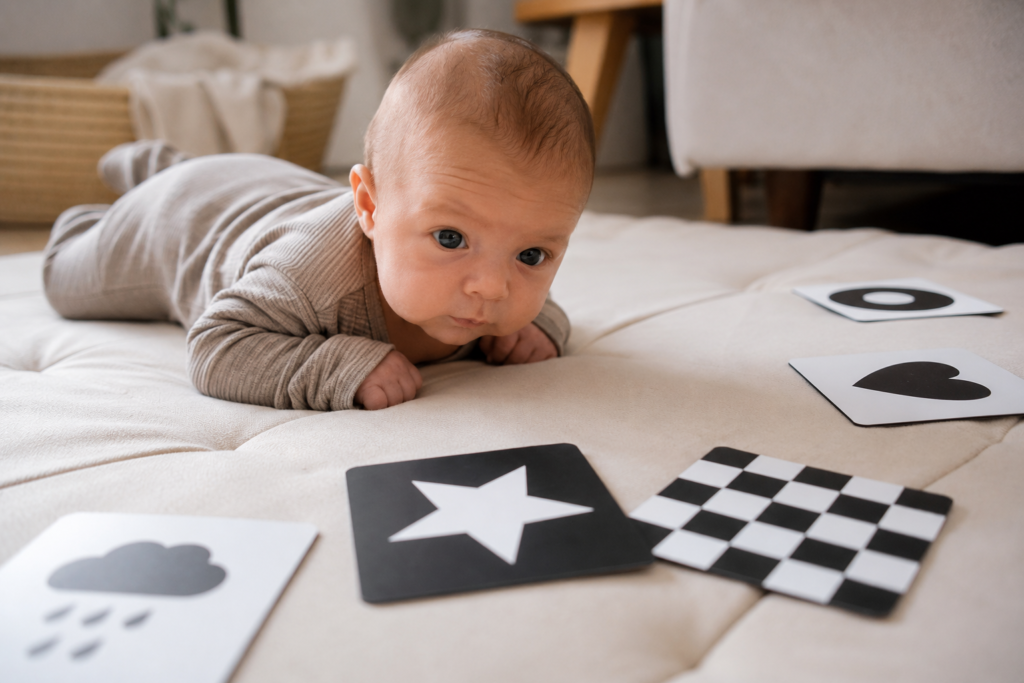
- Looking at black-and-white contrast cards
- Short tummy time sessions
- Looking around the house
- Sitting near a window and watching the world
The goal wasn’t entertainment.
It was simply connection and gentle stimulation.

Wake Windows at 2 Months
Typical wake window: 60–90 minutes
At two months, babies often become a little more alert and curious.
Some simple activities we enjoyed included:
- Tummy time
- Play gym time
- Stroller walks
- Baby wearing
- Listening to music
- Looking at contrast cards
This was also when floor play started becoming a bigger part of our day.
The Lovevery Play Gym became one of our most-used newborn items because it created an easy place to spend a few minutes together during wake windows.
See the play gym we used during the newborn stage
Wake Windows at 3 Months
Typical wake window: 60–120 minutes
By three months, many babies begin staying awake much longer between naps.
My son became noticeably more interactive around this age.
Wake windows often included:
- Longer floor play sessions
- Tummy time
- Baby wearing
- Stroller walks
- Talking and singing
- Watching everyday household activities
One thing I learned quickly was that babies don’t necessarily need elaborate activities.
Often they just want to be included in daily life.

Signs Your Baby May Be Ready for a Nap
While tracking newborn wake windows can be helpful, I found sleepy cues even more helpful.
Some common signs include:
- Yawning
- Red eyebrows
- Looking away from stimulation
- Fussiness
- Becoming unusually quiet
- Staring off into space
- Rubbing eyes (for some babies)
For my son, red eyebrows were often one of the earliest signs that he was getting tired.
Once I started recognizing his cues, naps became much easier than trying to follow the clock perfectly.
What We Actually Did During Wake Windows
Most of our wake windows were surprisingly simple.
Some of our favorites included:
- Tummy time
- Looking at contrast cards
- Baby wearing
- Stroller walks
- Talking and singing
- Floor play
- Watching ceiling fans
- Elimination communication after wake-ups
- A few minutes of diaper-free time
If you’re looking for more simple ideas, read my guide to Simple Newborn Activities for Wake Windows (What We Actually Did)
We started practicing elimination communication when my son was around two weeks old.
After wake-ups, I would often hold him over a small top-hat potty for a few minutes before putting on a fresh diaper.
It won’t be part of every family’s routine, but it became a helpful part of ours and often saved us from multiple back-to-back diaper changes.
Diaper-free time also became a simple part of our daily routine and gave his skin a chance to breathe.

Don’t Stress About Wake Windows
If I could go back and tell myself one thing during the newborn stage, it would be this:
Don’t stress so much about wake windows.
They can be helpful guidelines, but they aren’t rules.
Some days your baby will be tired sooner.
Some days they’ll stay awake longer.
Some feeds will be quick.
Some will take forever.
Babies aren’t robots.
The more I learned to watch my son instead of constantly watching the clock, the more confident I felt.
During the first three months, wake windows are less about following a perfect schedule and more about learning your baby’s natural rhythms.
And honestly?
That’s exactly what your baby needs right now.
Related Articles for New Parents
- Simple Newborn Activities for Wake Windows (What We Actually Did)
- Newborn Routine Ideas for the First 3 Months (What Our Days Actually Looked Like)
- Best Toys for Newborns 0–3 Months (What Actually Helped Development)
- Newborn Survival Guide for First Time Moms (What Actually Helps in the First Few Weeks)
- Best Tummy Time Essentials for Newborns (What Actually Helped)
- Postpartum Essentials for New Moms (What Actually Helps Recovery)